

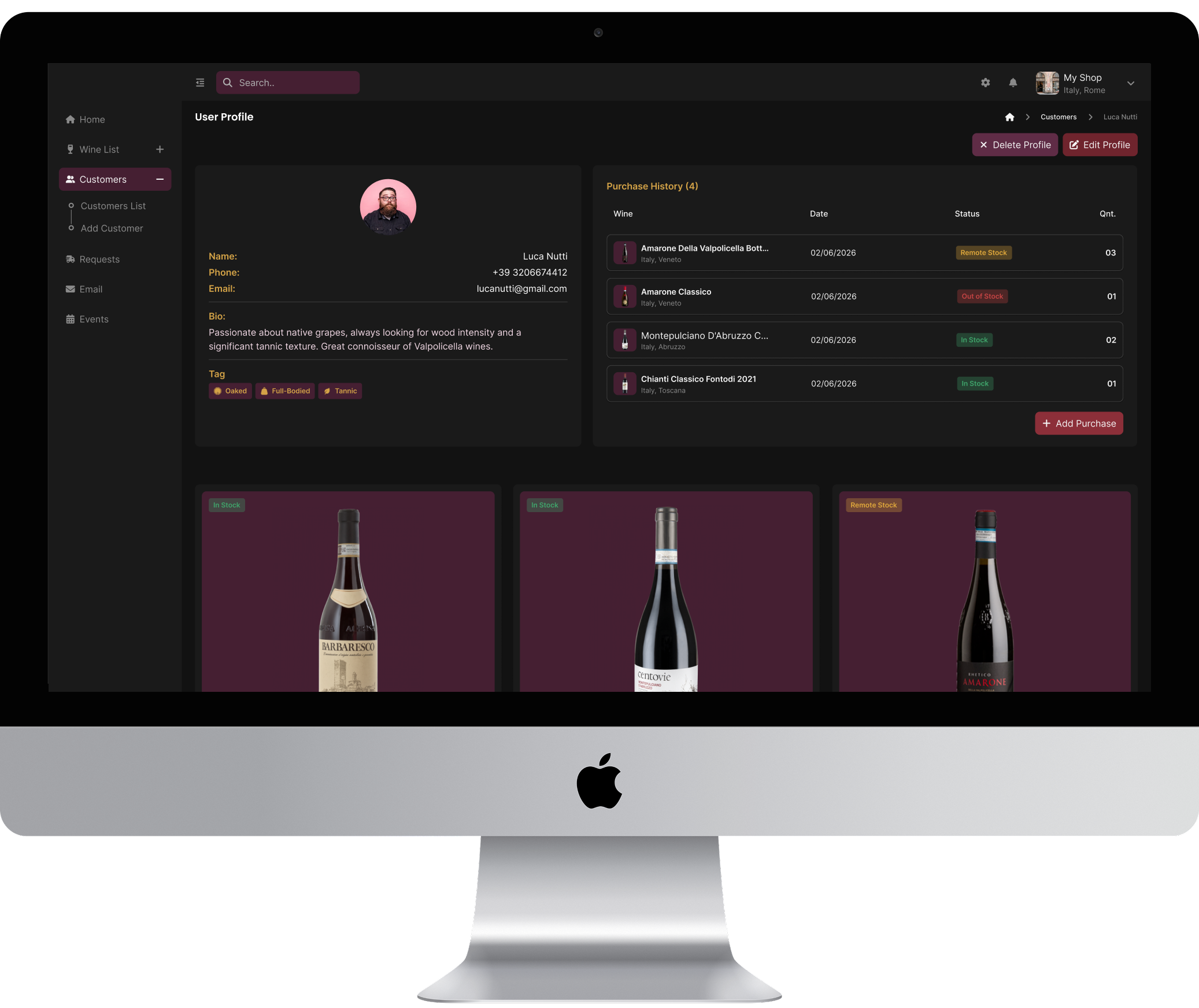
A CRM built with the mission of turning winery management into a strategic asset. It not only enables instant access to information and inventory management, but also empowers sales representatives to craft tailored proposals for loyal customers.

Constant messages, phone calls for product and customer details, or physical warehouse checks interrupted conversations with clients. This prevented sales representatives from proposing relevant, high-value alternatives.

Eliminate process fragmentation and empower independent management of products and customers to deliver a personalized, high-quality experience.

UX/UI Lead & Front-End Developer. I led the entire product lifecycle: from user research and interface design to translating components into clean, scalable code.

To gain a deep understanding of industry dynamics, I conducted field research by interviewing key stakeholders. For this project, however, I took an extra step: leveraging experience from previous projects, I also listened to my users' end customers. Initial assumptions pointed toward management software focused on eliminating friction between wineries. However, by conducting in-depth research across both users and their clients, the project evolved from a simple management tool into a product designed to safeguard relational quality between seller and customer.
"I identify as an artisan storyteller."
Massimo, a Winery & Customer Experience Manager, needs an internal tool that allows him to instantly recognize every customer and seamlessly access relevant information and product statuses, enabling him to craft proposals tailored to their tastes and ensure long-term relational quality and continuity.


Massimo's journey begins the moment a customer enters the store; this is where his path starts and obstacles arise.
I wanted to understand the journey, emotions, and challenges the sales representative faced daily when trying to offer something unique or tailored to their customer.
Mapping this journey was essential to identifying peak friction points and turning them into opportunities.
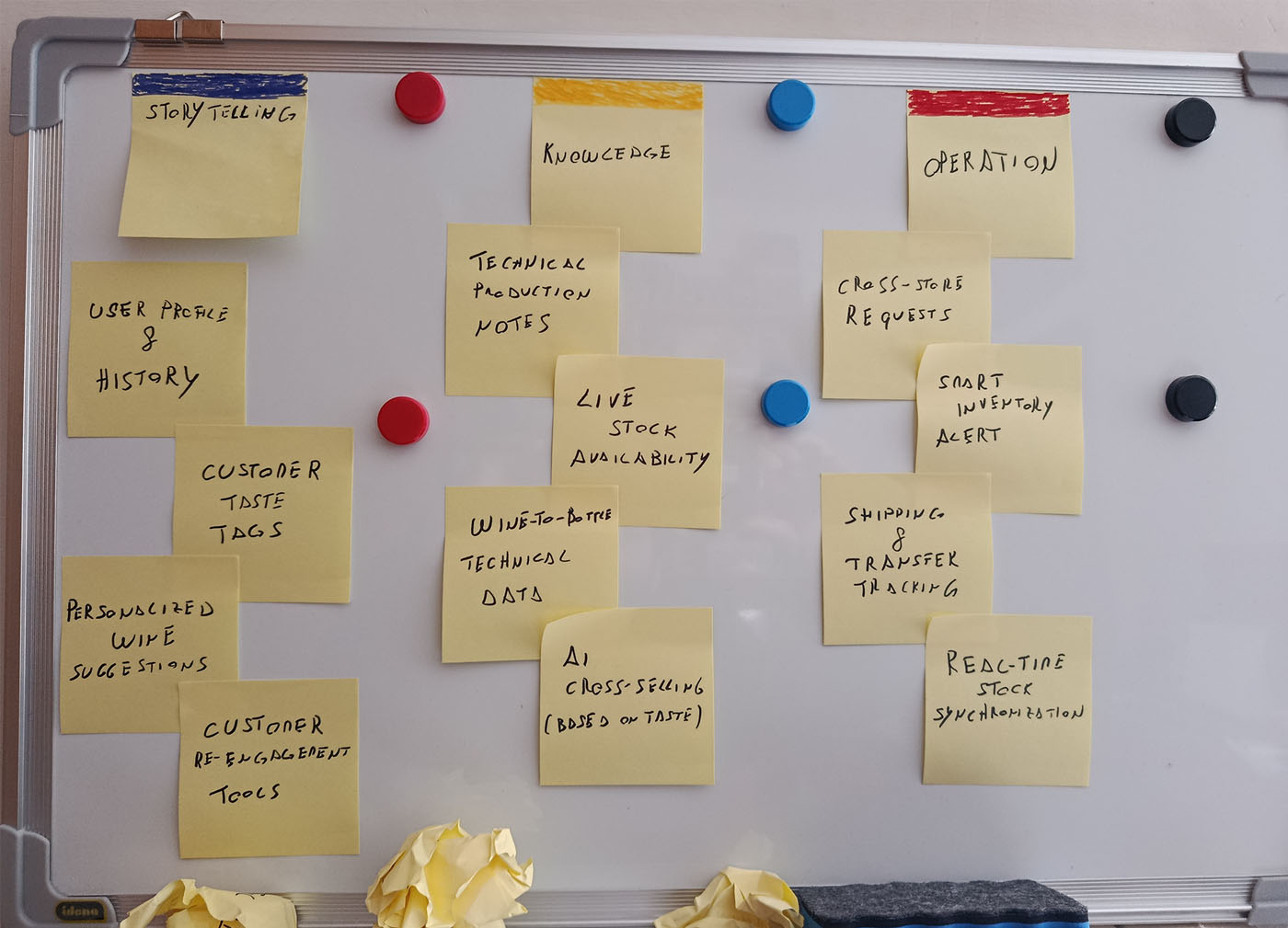
In order to build a strong value proposition, various features and insights were identified and isolated.
This was essential in defining a final value proposition. A concrete example is shown by the main features categorized under "Storytelling":
- Product History: Instant access to past customer purchases to understand how their tastes have evolved.
- Custom Tags: Quick visual indicators to map each guest's tastes and preferences.
- Smart Suggestions: An automated system that merges current winery inventory with customer history and preferences to instantly suggest the perfect alternative.
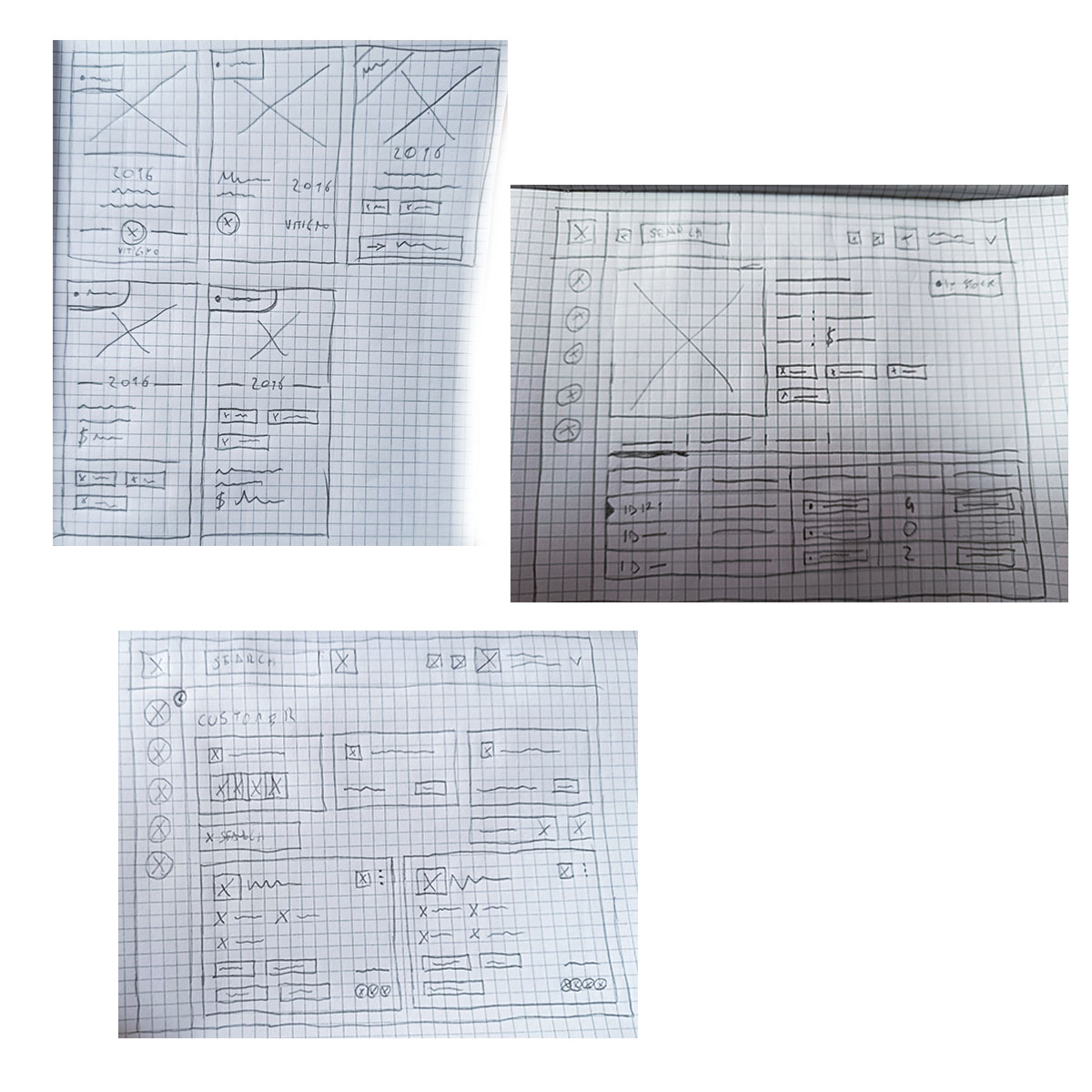
Paper & Digital Wireframes / Usability Testing
Minimal style of the paper wireframes, focusing on the wine card, user listing, and wine detail sheet with an attached stock table across different wineries.

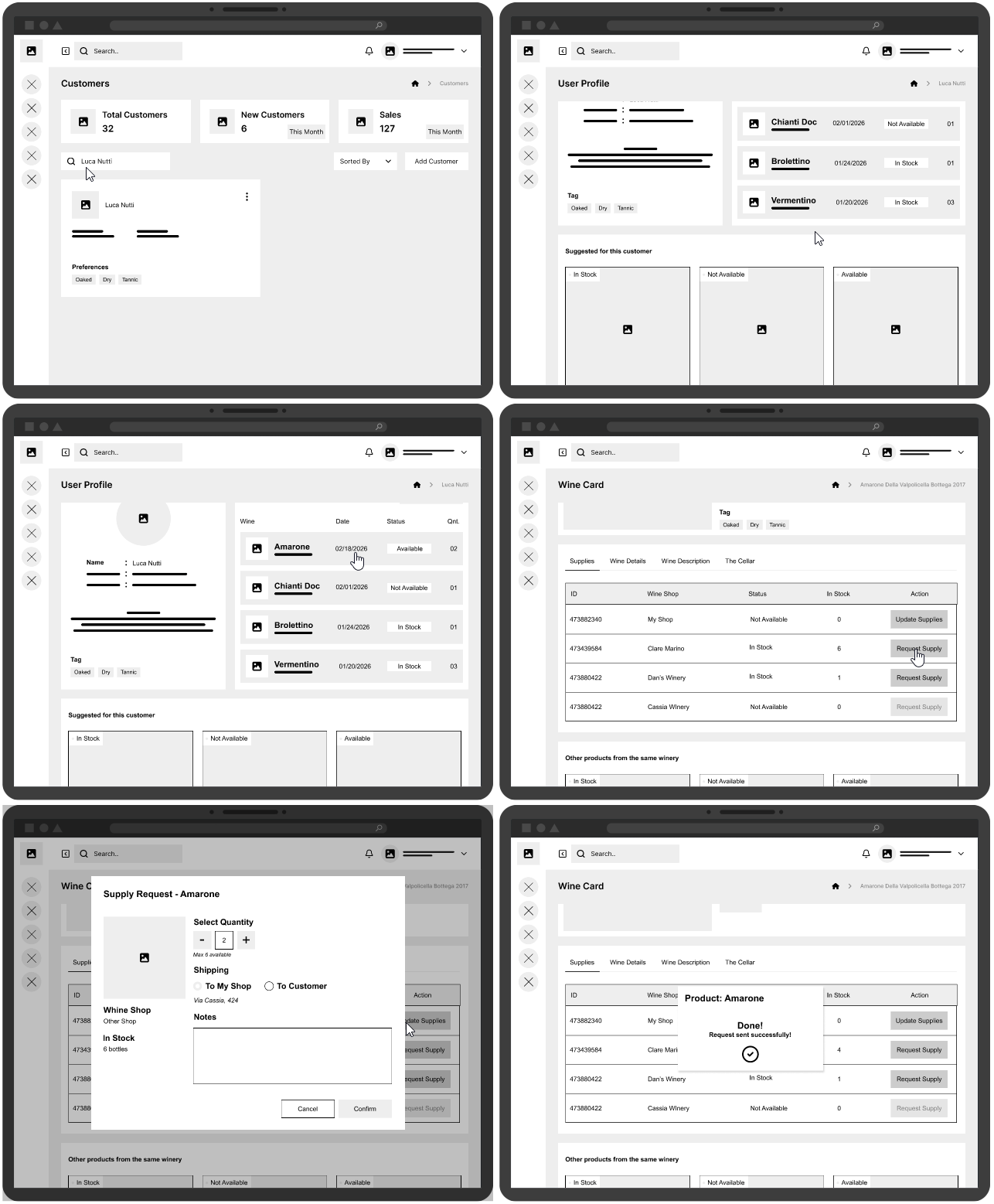
In the main listing, each individual customer card clearly and instantly highlights their tastes using dedicated visual tags. This gives sales reps an immediate overview of customer preferences.
Within each customer's personal profile, there are two key features: automated system suggestions and customer purchase history.
In this sheet, sales reps can craft relevant, valuable proposals or retrieve previously purchased products. To deliver high quality and eliminate fragmentation, users can easily check each product's status and availability.


The wine sheet represents both the operational and emotional core for the seller. Beyond updated details on grape varieties and product characteristics, reps can verify where the product is stored and request a transfer to their location or customer, significantly reducing logistical friction.
I structured a low-fidelity interactive prototype based on a real-world scenario. The user (the seller) was asked to complete a logical workflow with high relational and operational value:
1. Recognition & Identification: Identify the customer entering the store by searching the listing and instantly checking their preference tags.
2. Consulting & History: Identify the customer's last purchase to kickstart sales storytelling.
3. Resolving Logistical Friction: Check the status and availability of the desired product. If the wine is not in stock locally, check other locations, request a transfer of two units, and have them delivered to their own branch.
All participants involved in the test successfully completed the requested task.
User Search: Participants expressed a desire for an advanced search system that goes beyond simple data retrieval by offering smart auto-suggestions while typing.
Stock Badges: Post-test interviews revealed confusion between "Available" and "In Stock" statuses.
Distance: When selecting a branch to request stock transfers, users highlighted the need to see the physical distance to other shops.
Mockups & Prototype
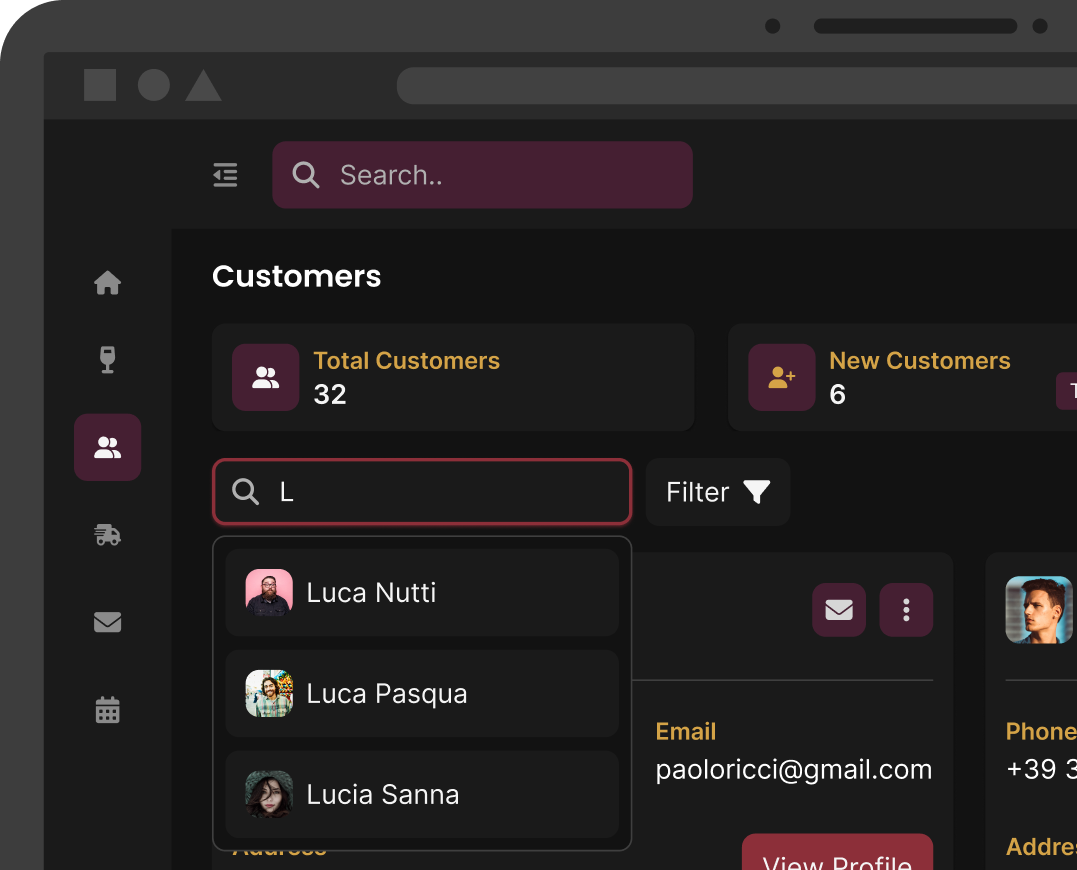
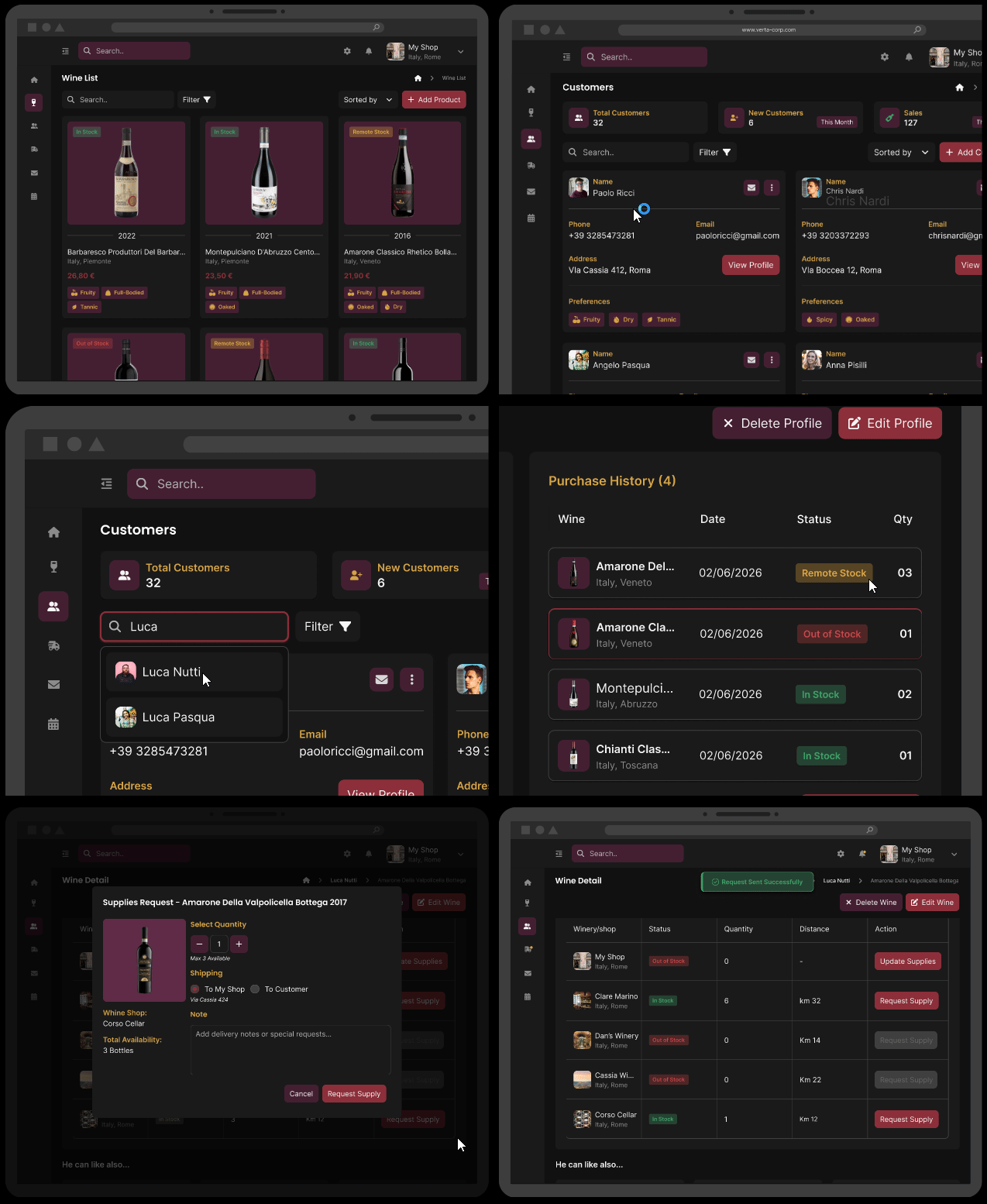
Here is how I integrated a smart search system: thanks to auto-suggestions while typing, users can find customers smoothly and quickly.
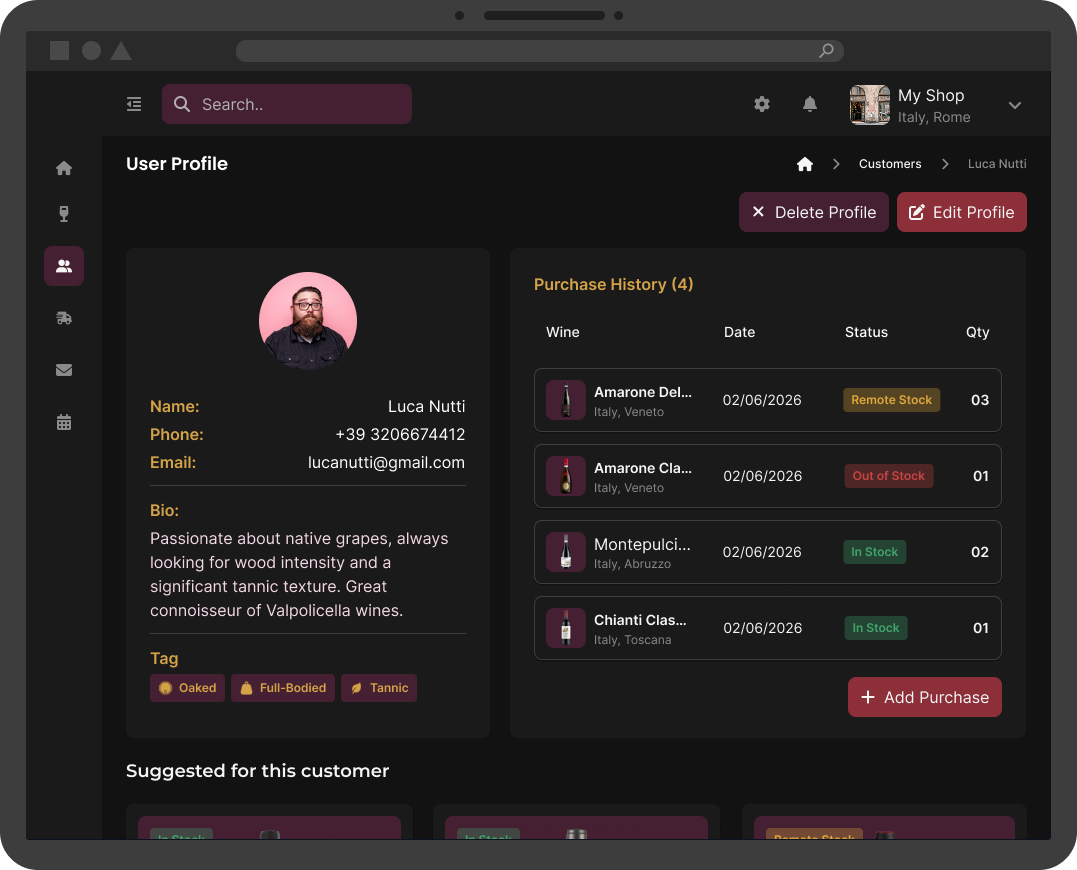
Improved wine availability labels. I realized the importance of more intuitive naming to avoid uncertainty during operations, using "Remote Stock" for inventory in other warehouses so it wouldn't be confused with "In Stock".
Integrated an inventory column displaying the distance to various shops. Including this data allows sales reps to choose the supply winery not only based on stock levels, but also on delivery timing and convenience.
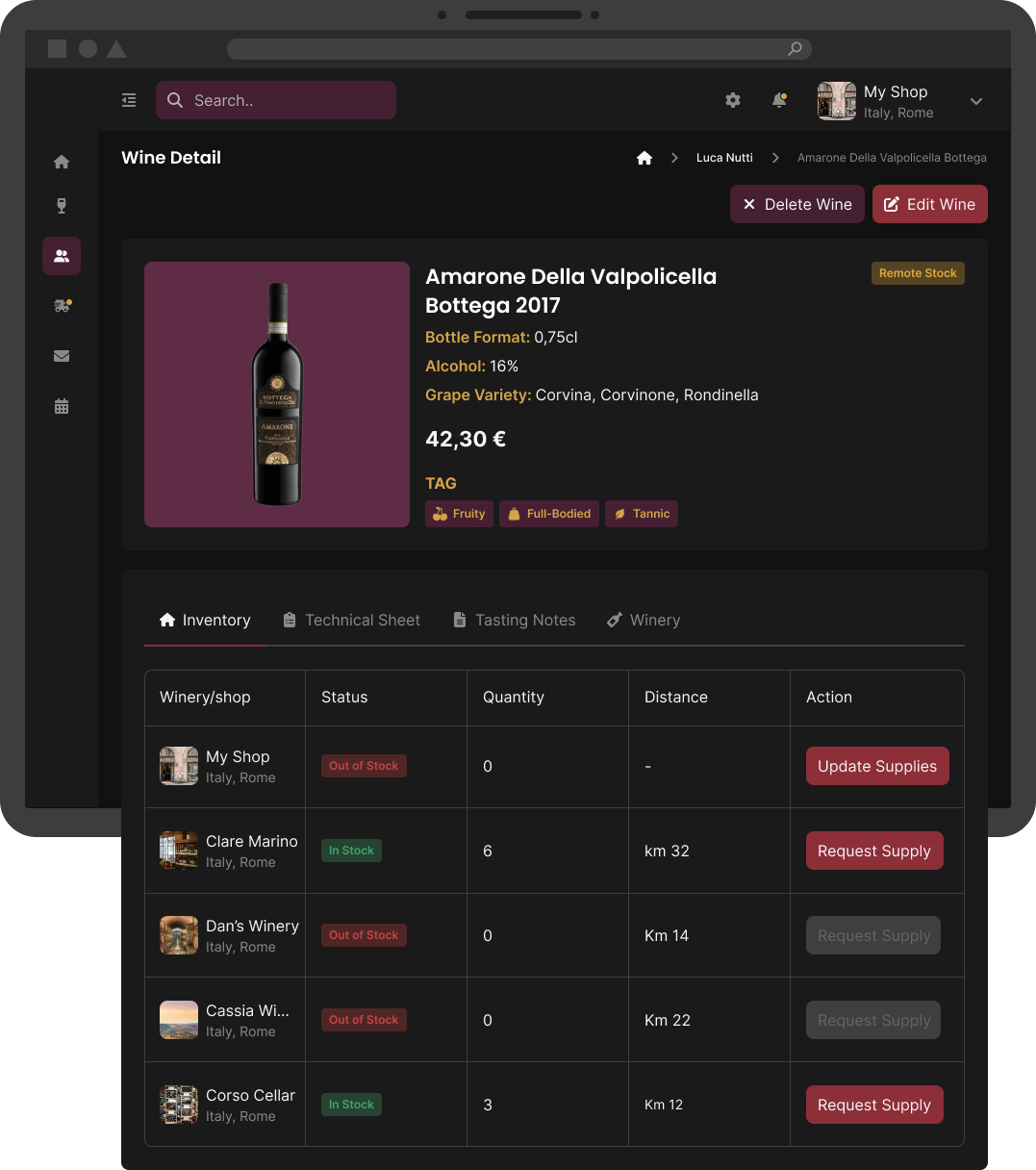
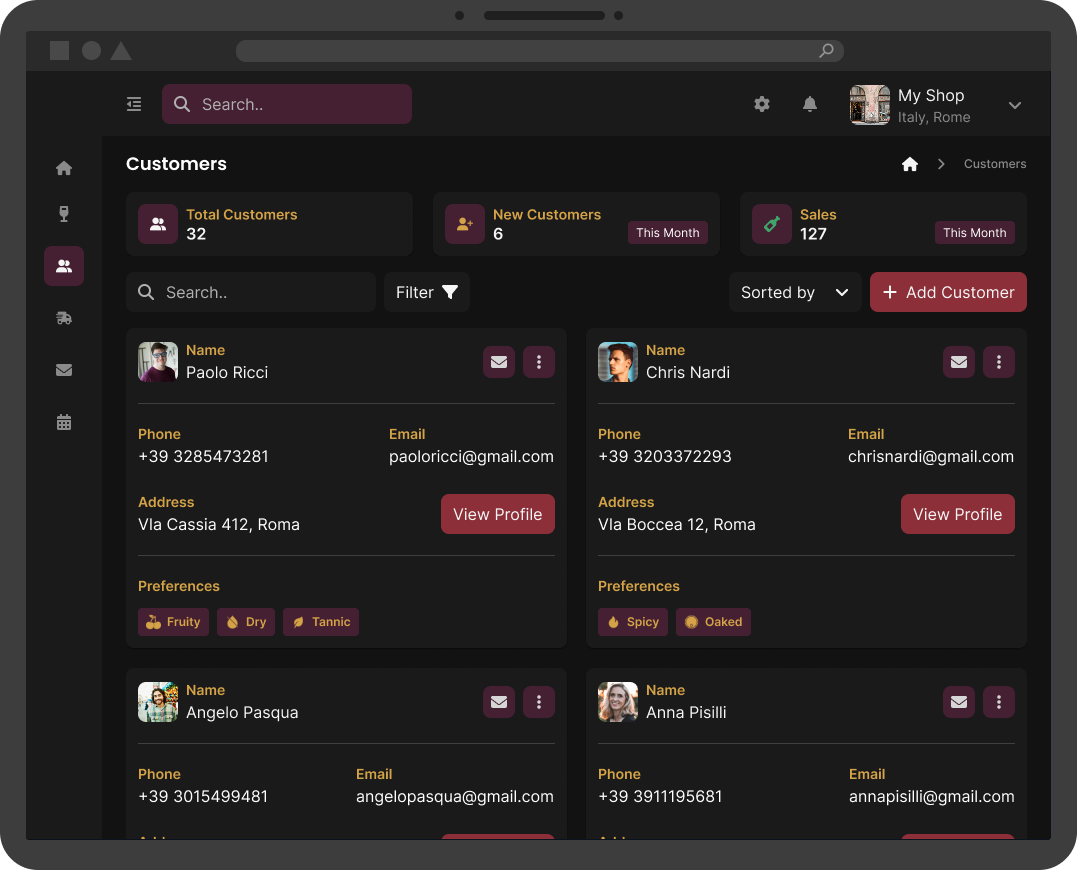
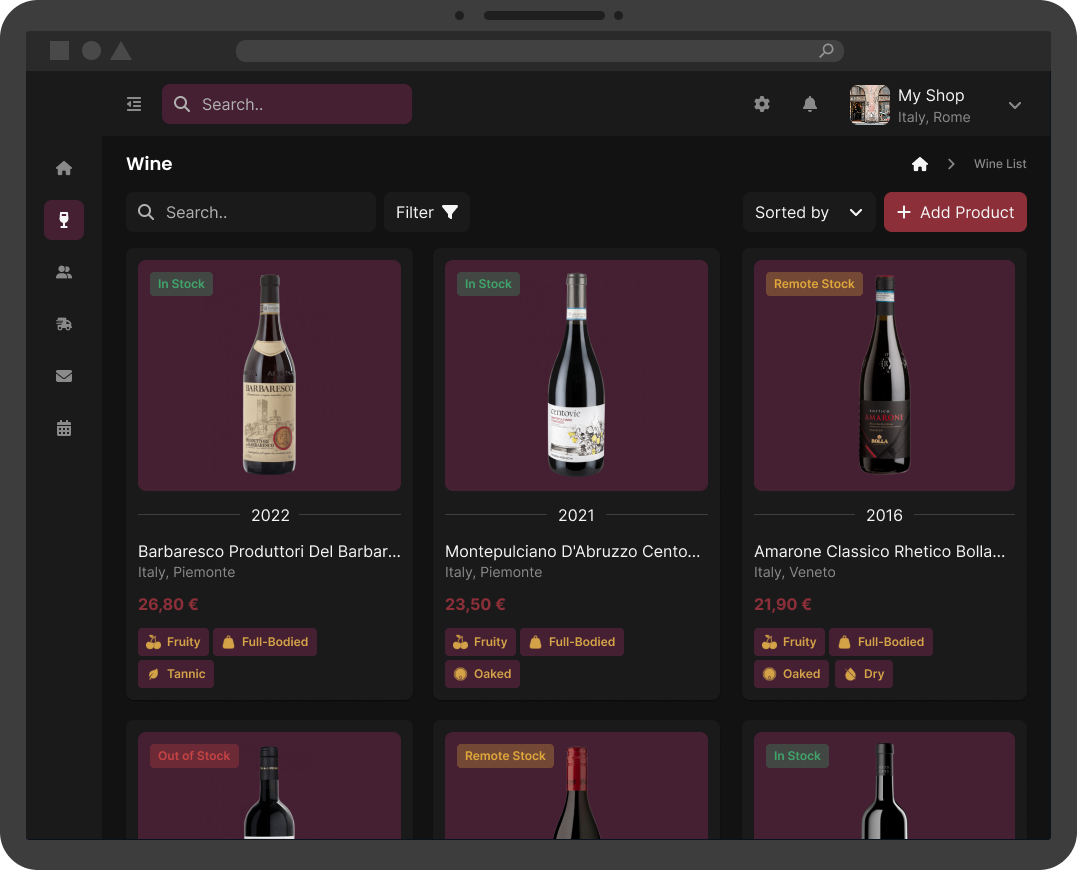
In the final high-fidelity prototype, the seller's entire journey comes to life through a fluid, clean interface optimized for daily operations. The entire seamless flow can be experienced step-by-step:
1. Search & Identification: Instant access to the customer's personal profile directly from the listing.
2. Consultation & History: Intuitive tracking of past purchases and preferences, backed by clear visual indicators for product statuses.
3. Immediate Logistics Action: Identifying stock levels and requesting product transfers via a contextual modal dialog.
Logistical and process fragmentation: No more WhatsApp messages, phone calls, or physical warehouse checks interrupting client conversations—resulting in a reduced cognitive load for the seller.
Supports business growth: Ability to manage more customers and inventory without compromising relationship quality.
This project represented a key milestone in my professional evolution, allowing me to capitalize on insights from past experiences. The true breakthrough was reaching a dual layer of empathy: I didn't stop at interviewing key stakeholders and sales reps—I also listened directly to their customers. This approach allowed me to design not just software, but a relational bridge.
What I would improve (Next Steps): Design is never truly finished. Analyzing post-launch interviews and reflecting on potential product iterations, I identified a crucial area for improvement: allergen management. If I were to build the next release, I would integrate a dedicated tagging system not only for taste preferences, but also for intolerances and allergens. In the wine industry, this feature would be a vital pillar for both guest safety and further elevating the level of care and personalized service.